

Top Chemical Pump Manufacturer Zhejiang Kaicheng Advances Industrial Pumping Solutions
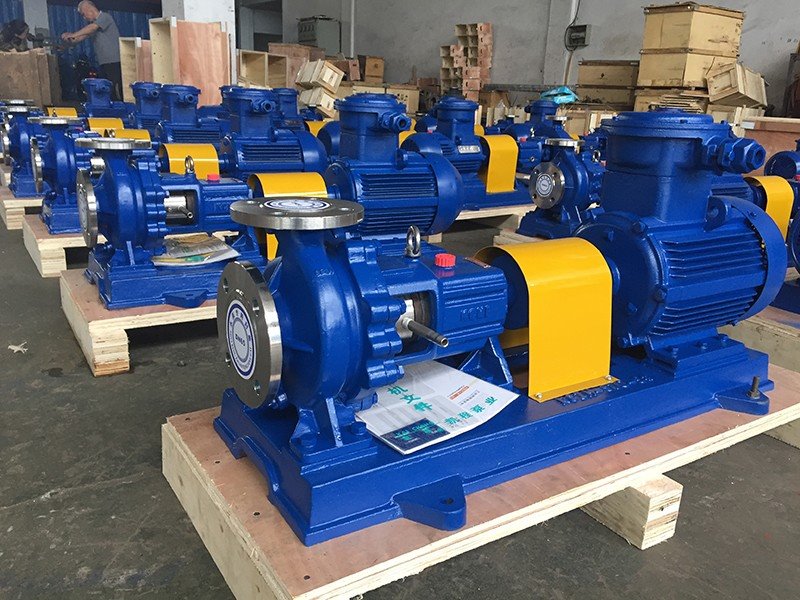
IH Series Chemical Pump
WENZHOU, ZHEJIANG, CHINA, October 21, 2026 /EINPresswire.com/ --
As industrial operations place growing emphasis on fluid-handling reliability, chemical compatibility, and efficient wastewater management, pump manufacturers continue to play an important role in supporting production across multiple sectors. Zhejiang Kaicheng Pump Valve Co., Ltd. is part of this competitive market, offering pump-related products for customers seeking solutions for industrial fluid transfer and water management. Its product range includes Clean Water Centrifugal Pump and Sewage Pump, two categories that address different operating requirements and illustrate the importance of selecting suitable pumping equipment for each application.
Chemical pumps are essential in industries where liquids must be transferred safely and consistently through production processes. Chemical manufacturing, petroleum processing, pharmaceuticals, metallurgy, environmental protection, and wastewater treatment can all require equipment designed around specific fluid characteristics and operating conditions. Selecting the right pump involves considering not only flow rate and pressure but also liquid composition, temperature, viscosity, the presence of suspended solids, and the compatibility of wetted components with the medium being handled.
Against this background, Zhejiang Kaicheng Pump Valve Co., Ltd. operates in a market where customers increasingly value practical product selection, dependable equipment performance, and clear technical communication. As industrial requirements become more specialized, the ability to match a pump design with the intended duty remains an important factor in operational efficiency and long-term equipment management.
Chemical Pump Technology and Industrial Fluid Handling
Chemical pumps are designed to move liquids used in industrial processing, including fluids that may require special attention to corrosion resistance, temperature tolerance, sealing, or material compatibility. Unlike general water-transfer applications, chemical service can involve substances whose properties place additional demands on pump construction. The choice of pump materials, mechanical seals, impeller design, and operating parameters can therefore have a direct influence on service life and maintenance needs.
Centrifugal pumps are widely used in industrial fluid handling because they can provide continuous flow and can be configured for a broad range of operating conditions. A rotating impeller transfers energy to the liquid, enabling it to move through the pump and connected pipework. The performance of a centrifugal pump depends on the relationship between flow, head, rotational speed, liquid properties, and system resistance.
For chemical applications, the pump type must be matched to the actual medium. Certain liquids may require corrosion-resistant alloys, engineered plastics, specialized linings, or carefully selected sealing systems. Others may need designs that address elevated temperatures, solids content, or specific hygiene and process requirements. A pump described broadly as a chemical pump should not automatically be assumed suitable for every chemical; purchasers should verify the manufacturer's material specifications and operating limits before installation.
Zhejiang Kaicheng Pump Valve Co., Ltd. serves customers in a market that includes chemical pumps and other industrial pump categories. For end users, this type of product diversity can support comparisons across different fluid-transfer tasks, provided that equipment selection is based on verified technical information. Clear communication about the medium, operating temperature, required capacity, system pressure, and installation environment helps narrow the available choices and reduces the risk of specifying unsuitable equipment.
Clean Water Centrifugal Pump for General Water Transfer
A Clean Water Centrifugal Pump serves applications involving relatively clean liquids where efficient and consistent transfer is required. Such pumps can be used in water supply systems, industrial circulation, equipment cooling, general utility services, and other applications where the liquid's characteristics fall within the pump's specified operating range.
Centrifugal pump performance is commonly assessed through flow rate, head, efficiency, power consumption, and the pump's operating point within the system. Flow rate describes the volume of liquid moved over a given period, while head represents the energy imparted to the liquid expressed as an equivalent height. A pump must provide sufficient head to overcome elevation differences, friction losses, and pressure requirements throughout the connected system.
Correct sizing is essential. Selecting a pump with insufficient capacity may prevent the system from meeting operational requirements, while choosing an oversized unit can lead to inefficient operation, unnecessary energy use, or control challenges. Engineering teams typically compare pump performance curves with system requirements to identify a suitable operating range. They also consider inlet conditions and available net positive suction head to help prevent cavitation, which can damage internal components and reduce performance.
For industrial users, a Clean Water Centrifugal Pump may be part of a broader water-management arrangement that includes storage tanks, pipelines, valves, filters, and control systems. Compatibility between these components is important because the performance of the complete installation depends on the system as a whole rather than the pump alone.
Maintenance practices can also influence reliability. Routine inspections may include checking for leakage, unusual vibration, abnormal noise, changes in flow or pressure, and signs of bearing or seal wear. Keeping suction lines clear, maintaining correct alignment, and operating the pump within its specified limits can help reduce avoidable failures. The appropriate maintenance interval depends on the pump design, operating conditions, and manufacturer's guidance.
By including Clean Water Centrifugal Pump among the product names associated with Zhejiang Kaicheng Pump Valve Co., Ltd., the company addresses a category with applications extending beyond specialized chemical processes. Water-transfer equipment remains fundamental to many industrial facilities, and selecting a suitable model can help users maintain stable operations across utility and production systems.
Sewage Pump Solutions for Wastewater Management
Wastewater handling presents a different set of challenges from clean-water transfer. Sewage may contain suspended solids, fibers, organic matter, and other materials that can interfere with conventional pump operation. A Sewage Pump is therefore selected according to the composition of the liquid, the size and nature of solids, the required flow and head, and the characteristics of the installation.
Sewage pumps are used in municipal wastewater systems, commercial buildings, industrial drainage, wastewater treatment facilities, and other settings where contaminated water must be moved reliably. Depending on the design, equipment may be installed in wet wells, drainage pits, treatment systems, or other locations requiring wastewater transfer. Some configurations are designed to reduce clogging, while others use cutting or grinding mechanisms for particular types of waste. Not every sewage pump has the same capabilities, so the intended duty must be defined before a model is selected.
A major consideration is solids-handling capacity. If the pump passage is too small for the material being transferred, blockages can cause interruptions and increase maintenance requirements. Engineers therefore assess the expected solids content and the pump's specified free passage or other relevant design characteristics. They also evaluate whether the liquid contains abrasive particles or substances that may affect the materials used in the pump.
Installation conditions are equally important. Submersible sewage pumps, for example, operate while submerged in the liquid being handled, whereas other designs may be installed outside the wet well or used in self-priming arrangements where appropriate. The choice depends on the system layout, suction conditions, available space, maintenance access, and required operating flexibility.
For wastewater systems, reliability has consequences beyond equipment uptime. Pump failure can interrupt treatment processes, create overflow risks, or disrupt drainage in commercial and industrial facilities. Proper sizing, installation, electrical protection, monitoring, and preventive maintenance therefore form part of a complete wastewater management strategy.
The Sewage Pump category complements clean-water pumping by addressing applications where the liquid contains contaminants or solids. For purchasers considering products from Zhejiang Kaicheng Pump Valve Co., Ltd., technical discussions should establish the wastewater characteristics and installation requirements before a particular pump is specified. Confirming the recommended operating range and maintenance procedures can help operators plan for reliable service.
Serving Diverse Industrial Applications
Pump requirements vary considerably across industries. Chemical production facilities may prioritize corrosion resistance and compatibility with process liquids. Petroleum-related operations can involve fluid properties and operating conditions that demand careful engineering review. Environmental protection and wastewater treatment projects must account for solids, changing inflow conditions, and continuity of service. General industrial facilities, meanwhile, may need dependable pumps for water circulation, utility supply, and equipment support.
This variety makes product selection an important part of project planning. Before purchasing a pump, buyers generally need to establish the required flow rate, total dynamic head, fluid temperature, liquid density, viscosity, and any chemical or particulate characteristics that may affect equipment performance. The site layout, available power supply, installation method, and expected duty cycle also influence the final selection.
In chemical service, materials compatibility deserves particular attention. A pump's casing, impeller, shaft components, seals, and gaskets may come into contact with the process liquid. If these materials are unsuitable, corrosion, swelling, leakage, or premature wear may occur. Buyers should provide accurate information about the fluid and seek confirmation that the proposed construction is appropriate for the intended conditions.
For sewage applications, the evaluation may focus more heavily on solids handling, clogging risk, wear resistance, and ease of maintenance. For clean-water applications, energy efficiency and the relationship between the pump's performance curve and the system demand may be central considerations. Although these applications share basic pumping principles, their design priorities are not interchangeable.
Zhejiang Kaicheng Pump Valve Co., Ltd. operates within this broader industrial equipment market, where customers may need different pump types for different parts of a facility. The availability of multiple categories can make it easier to explore options, but technical verification remains essential. Product names indicate the general purpose of a pump; detailed specifications determine whether it is suitable for a particular installation.
Quality Assurance, Maintenance, and Lifecycle Performance
The long-term value of a pump depends on more than its initial purchase price. Energy consumption, maintenance labor, spare parts, service interruptions, and equipment lifespan can contribute significantly to total ownership cost. Buyers evaluating pumping equipment increasingly benefit from considering these lifecycle factors alongside upfront cost.
Quality assurance can include dimensional inspection, material verification, assembly checks, and performance testing according to the relevant product requirements. Testing may be used to verify parameters such as flow, head, power consumption, leakage, and vibration, depending on the pump type and applicable standards. Purchasers with demanding operating conditions may request relevant test documentation or acceptance criteria before finalizing a purchase.
Maintenance planning should reflect the actual operating environment. Pumps used continuously in industrial processes may require different inspection schedules from equipment used intermittently for drainage. Operators can monitor performance trends to identify changes that may indicate impeller wear, blockage, seal problems, bearing deterioration, or other issues. Unexpected changes in vibration, noise, flow, or power consumption should be investigated rather than ignored.
Correct installation also supports reliability. Foundations, alignment, piping loads, suction conditions, electrical protection, and control settings can all influence pump performance. Poorly designed pipework or inadequate inlet conditions may reduce efficiency and increase the likelihood of operational problems. Following the manufacturer's installation and operating instructions helps reduce these risks.
For chemical and wastewater systems, safety procedures are particularly important. Maintenance personnel should understand the nature of the liquid handled, isolate equipment appropriately, and follow site procedures before opening or servicing a pump. Where hazardous chemicals or contaminated wastewater are involved, appropriate protective measures and waste-handling procedures are necessary.
As industrial users seek to improve uptime and control operating costs, a disciplined approach to pump selection and maintenance can be as important as the original equipment specification. Manufacturers and suppliers that communicate technical requirements clearly can help buyers make more informed decisions throughout the purchasing process.
The Outlook for Chemical and Industrial Pump Manufacturers
Demand for industrial pumps is linked to investment in manufacturing, water infrastructure, environmental management, and process industries. As facilities expand or modernize, operators need equipment that fits increasingly specific operating requirements. At the same time, attention to energy efficiency, maintenance planning, and operational reliability continues to influence purchasing decisions.
Digital monitoring and automated control are also shaping industrial equipment management. Depending on the application, sensors and control systems can help operators track pressure, flow, temperature, vibration, and other operating indicators. These tools may support earlier fault detection and better scheduling of maintenance, although their benefits depend on correct implementation and interpretation of the collected data.
Environmental management remains another important consideration. Wastewater collection and treatment require dependable pumping systems, while industrial facilities may need to transfer process liquids under controlled conditions. Choosing pumps that match the actual duty can help reduce unnecessary energy use and prevent avoidable operational problems. However, efficiency and environmental performance should be assessed using the specific pump model, system design, and operating profile rather than generalized claims.
For Zhejiang Kaicheng Pump Valve Co., Ltd., the wider market provides opportunities to serve customers across clean-water transfer, sewage handling, and specialized industrial pumping applications. Its product categories reflect distinct needs within the fluid-handling sector. As with any equipment purchase, customers should review current product data, confirm materials and performance parameters, and communicate their operating requirements before selecting a model.
About Zhejiang Kaicheng Pump Valve Co., Ltd.
Zhejiang Kaicheng Pump Valve Co., Ltd. is a Chinese pump and valve company serving the industrial fluid-handling market. Company information published on manufacturing and trade platforms describes its business as covering pump design, production, distribution, and service, with product categories including chemical pumps, centrifugal pumps, sewage pumps, self-priming pumps, submersible pumps, pipeline pumps, oil pumps, and related equipment. Its products are associated with applications in chemical processing, petroleum, environmental protection, municipal engineering, and other industrial sectors.
The company's relevant product offerings include Clean Water Centrifugal Pump and Sewage Pump. These products address different water-handling requirements: centrifugal pumps for suitable clean-water transfer duties and sewage pumps for wastewater applications involving contaminants or suspended solids. Customers should confirm the exact model specifications, construction materials, performance data, and installation requirements directly with the company to determine suitability for a particular project.
For purchasers seeking additional information about Zhejiang Kaicheng Pump Valve Co., Ltd. and its product range, the company's website is [www.kcmpumps.com].
Address: No.501 Zhangbao North Road, Dong ou Industrial Park, Oubei town, Yongjia, Zhejiang Province, China
Official Website: https://www.kcmpumps.com/
Huang Xiaowei
Zhejiang Kaicheng Pump Valve Co., Ltd.
sales@cnkcmp.com
Legal Disclaimer:
EIN Presswire provides this news content "as is" without warranty of any kind. We do not accept any responsibility or liability for the accuracy, content, images, videos, licenses, completeness, legality, or reliability of the information contained in this article. If you have any complaints or copyright issues related to this article, kindly contact the author above.
